
Keloid Treatment
Customised Relief & Scar Volume Reduction
Reduce the size, thickness, and discomfort of keloid scars with our customised Keloid Treatments. Using a combination of steroid injections, laser therapy, silicone therapy, and advanced scar management techniques, we help flatten raised scars, relieve symptoms, and improve the overall appearance of the skin while reducing the risk of recurrence.
BOOK CONSULTATION →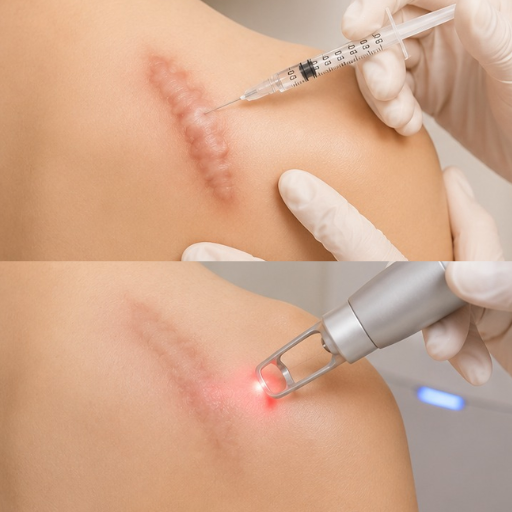
Pain Points & Agitation
"The scar is getting bigger instead of better."
What started as a small wound or scar may continue growing beyond the original injury, making patients feel frustrated and helpless.
Raised, thick or prominent scar
The uneven texture can make the skin look noticeably different, especially on the chest, shoulders, neck or ears.
Feeling self-conscious
Patients may avoid wearing certain clothes, showing their shoulders/back, or taking photos because they don't want the keloid to be seen.
Pain, itching or tenderness
The keloid may feel itchy, sore, sensitive or uncomfortable, making it more than just a cosmetic concern.
Constantly touching or checking it
Patients may repeatedly feel the raised area and become increasingly aware of it.
"Why won't it just go away?"
Keloids can be stubborn and may persist or recur, creating frustration after trying different solutions.
Fear of making it worse
Patients may worry that another procedure could trigger further scar growth or leave another visible mark.
Embarrassment when people notice it
Questions or comments such as "What happened there?" can make patients feel uncomfortable or exposed.
Loss of confidence
A visible keloid can affect how patients feel about their body and appearance.
Frustration after previous treatments
Patients who have tried creams, injections or other treatments without satisfactory improvement may feel discouraged.
Customised Scar Management
Reduce the size, thickness, and discomfort of keloid scars with our customised Keloid Treatments.
Using a combination of steroid injections, laser therapy, silicone therapy, and advanced scar management techniques, we help flatten raised scars, relieve symptoms, and improve the overall appearance of the skin while reducing the risk of recurrence.
Tailored Care For Every Scar
Every keloid is different. Our doctors will assess the size, location, and severity of your scar to recommend the most effective personalised treatment plan and minimise the risk of recurrence.
Benefits

Flattens raised keloid scars
Reduces redness and pigmentation
Relieves itching, pain, and discomfort
Softens thick scar tissue
Improves skin texture and appearance
Helps prevent further keloid growth
Reduces the risk of scar recurrence with combination therapy
Minimally invasive with little downtime
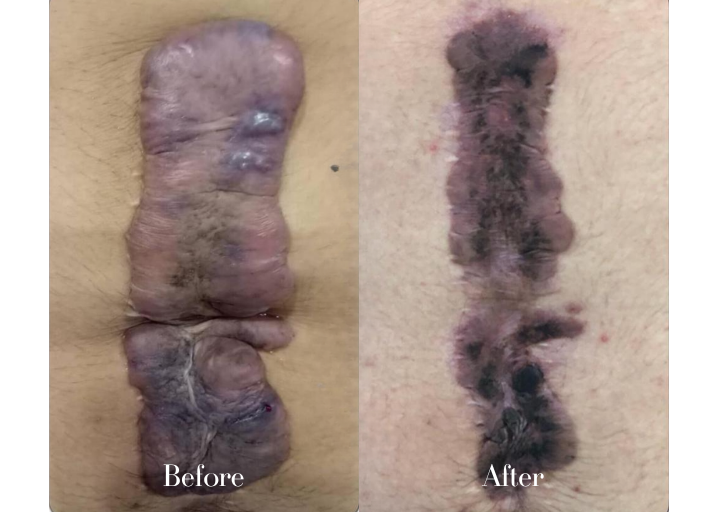
Social Proof: Before & After & Reviews

Treatment Process & Expectations
Consultation & Assessment
Doctor examines the scar's size, thickness, location, and symptoms to confirm it is a keloid.
Discussion of your healing history and the most suitable customised treatment approach.
Treatment Planning
A personalised treatment plan is selected based on the keloid and your skin/healing history.
Treatment may involve one or a combination of approaches, depending on the case.
Skin Preparation
The area is cleaned and prepared before treatment.
The treatment area is kept clean to minimise any risk of infection.
Anaesthesia
Local anaesthetic may be used depending on the chosen treatment technique.
You may feel a brief pinch or sting initially, followed by numbness in the area.
Keloid Treatment
The doctor treats the raised scar tissue using the selected technique (e.g., steroid injections, laser therapy).
You may experience pressure, mild discomfort, warmth or tenderness during and after the treatment.
Immediate Aftercare
The treated area is cleaned and dressed when necessary.
Mild redness, swelling, tenderness, or sensitivity may occur temporarily.
Healing & Scar Remodelling
The treated area gradually settles and the scar begins to soften or flatten over time.
Improvement is usually gradual rather than immediate. Multiple treatment sessions may be needed.
Follow-Up
The doctor reviews the scar's response and progress of the healing.
Further treatment may be recommended depending on how the keloid responds over time.
Maintenance / Prevention
Additional scar-care measures may be recommended to reduce recurrence.
Consistent follow-up is important because keloids can recur even after successful treatment.
Suitable For
Keloid scars
Hypertrophic scars
Surgical scars
Acne keloids
Ear piercing keloids
Burn and traumatic scars
Raised scars causing discomfort or cosmetic concerns
Contraindications & Recovery
| Category | Details |
|---|---|
| Active skin infection | Treatment may need to be postponed if there is an active infection, open wound or significant inflammation around the area. |
| Uncontrolled medical conditions | Conditions that may affect healing or increase treatment risks should be discussed with the doctor beforehand. |
| Bleeding/clotting issues | Patients with bleeding disorders or taking blood-thinning medication should inform the doctor before treatment. |
| Pregnancy/breastfeeding | Depending on the treatment technique and medication used, treatment may be postponed or modified. |
| History of abnormal scarring | This is particularly important for keloid patients. The doctor will assess the scar history and likelihood of recurrence. |
| Medication / allergy considerations | Inform the doctor about all medications, supplements and known allergies before treatment, particularly if injections or local anaesthetic are involved. |
| Uncertain diagnosis | A raised scar should be assessed to confirm that it is actually a keloid before treatment. |
Recovery Phase
| Recovery Stage | What to Expect |
|---|---|
| Immediately after treatment | Mild redness, swelling, tenderness or sensitivity may occur around the treated area. |
| First few days | The area may feel tender or irritated as it settles. Follow the clinic's wound-care instructions carefully. |
| Keep the area protected | Keep the treated area clean and avoid unnecessary friction, rubbing or pressure. |
| Don't pick or scratch | Avoid disturbing any scab, crust or healing tissue, as this can delay healing and increase complications. |
| Avoid irritation | Follow your doctor's advice regarding exercise, swimming, excessive sweating and activities that may rub the treated area. |
| Sun protection | Protect the treated area from excessive sun exposure to minimise the risk of prolonged pigmentation changes. |
| Gradual improvement | Keloids generally improve progressively rather than disappearing immediately. The scar may gradually become flatter, softer and less noticeable. |
| Multiple sessions may be needed | Keloids can be persistent, so more than one treatment may be required depending on the size and response. |
| Follow-up is important | Regular review allows the doctor to monitor healing, assess treatment response and identify recurrence early. |
Every keloid is carefully evaluated by our doctors to create an effective plan that addresses symptoms and minimizes recurrence risk.
Frequently Asked Questions
1. What is a keloid?
A keloid is an overgrowth of scar tissue that extends beyond the original wound. It can appear raised, firm, itchy, painful or darker than the surrounding skin.
2. Can keloids be completely removed?
Keloids can be difficult to eliminate permanently and may recur. Treatment focuses on flattening, softening, reducing symptoms and improving the appearance of the scar.
3. Is keloid treatment painful?
This depends on the treatment technique. Local anaesthetic may be used where appropriate to improve comfort. Some tenderness, pressure or discomfort may occur during or after treatment.
4. How long does the treatment take?
Treatment time depends on the size, thickness and location of the keloid, as well as the treatment method used.
5. Will one treatment be enough?
Not necessarily. Keloids can be stubborn, and multiple treatment sessions may be recommended depending on how the scar responds.
6. Will the keloid come back?
There is a possibility of recurrence. Your doctor may recommend follow-up and ongoing scar management to help control the risk of recurrence.
7. Will the keloid become flat immediately?
Usually not. Improvement is generally gradual, with the scar becoming flatter, softer and less prominent over time.
8. Can old keloids be treated?
Older keloids may still be treatable, but the response depends on factors such as the scar's size, thickness, location and duration. A consultation is needed to assess suitability.
9. Can all types of raised scars be treated as keloids?
No. Keloids and hypertrophic scars are different. A doctor should assess the scar before treatment to determine the appropriate diagnosis and treatment plan.
10. What should I expect after treatment?
Mild redness, swelling, tenderness or sensitivity may occur. Depending on the technique, the area may require specific wound care during recovery.
11. Can I exercise or swim after treatment?
You may need to temporarily avoid activities that cause excessive sweating, friction or expose the treated area to potentially contaminated water. Follow your doctor's specific aftercare instructions.
12. Can I apply scar cream immediately?
Not necessarily. Wait until the treated area has sufficiently healed and follow your doctor's recommended scar-care routine.
13. Will keloid treatment leave another scar?
Any procedure involving the skin carries some risk of scarring, pigmentation changes or other complications. Your doctor can explain the risks based on the specific treatment.
14. How soon will I see results?
Results vary. Keloid improvement is usually progressive, and the final appearance may take time to assess.
15. Who is suitable for keloid treatment?
Suitability depends on the type, size and location of the scar, previous treatments, medical history and individual healing response. A consultation is recommended before treatment.
Still hiding your scar? Let's work on it.
Don't let a stubborn keloid keep affecting your confidence.
Reduce the size, thickness, and discomfort of keloid scars with our customised Keloid Treatments. Book your doctor consultation with Pure Touch Clinic today.
BOOK YOUR CONSULTATION →Visit Our KL & PJ Branches
Bangsar South
UG-5, Upper Ground Floor, The Vertical Podium
Avenue 3, Bangsar South, No.7, Jalan Kerinchi
59200, Kuala Lumpur
Monday – Friday: 9:00 am – 5:30 pm
Saturday: 9:00 am – 1:00 pm
Sunday: Closed
Neo Damansara
F-LG-09, Neo Damansara
Jalan PJU 8/1, Damansara Perdana
47820 Petaling Jaya, Selangor
Monday – Friday: 9:00 am – 5:30 pm
Saturday: 9:00 am – 1:00 pm
Sunday: Closed