
Mole & Skin Tag Removal
Safe & Minimally Invasive Growth Removal
Remove unwanted moles and skin tags safely with our minimally invasive Mole & Skin Tag Removal treatments. Using advanced medical techniques, we carefully remove benign skin growths with minimal discomfort and downtime while aiming for the best possible cosmetic outcome.
BOOK CONSULTATION →
Pain Points & Agitation
| Patient Pain Point |
|---|
| Constantly noticing the mole or skin tag |
| Feeling self-conscious about appearance |
| More noticeable in photos |
| Trying to cover it with makeup |
| People commenting or asking about it |
| Skin tag irritation |
| Wanting a cleaner-looking complexion |
| Fear of removal |
| Feeling tired of hiding it |
| Desire for confidence |
| Agitation / Emotional Impact |
|---|
| "It's small, but somehow my eyes always go straight to it." |
| Makes them feel less confident, especially when looking in the mirror or getting ready. |
| They may feel the need to edit, crop or filter photos to hide it. |
| Concealer and makeup can only hide so much, creating daily frustration. |
| Even innocent comments can make them more conscious about the area. |
| May catch on clothes, jewellery or during shaving, causing discomfort and annoyance. |
| They feel the spot distracts from otherwise clear, healthy-looking skin. |
| Worried about pain, scarring or the area looking worse after treatment. |
| "I just want to stop thinking about it every time I look in the mirror." |
| Ultimately, they want to feel more comfortable and confident in their own skin. |
Safe & Precise Growth Removal
Remove unwanted moles and skin tags safely with our minimally invasive Mole & Skin Tag Removal treatments.
Minimal Discomfort & Downtime
Using advanced medical techniques, we carefully remove benign skin growths with minimal discomfort and downtime while aiming for the best possible cosmetic outcome.
Benefits

Safely removes unwanted moles and skin tags
Improves skin appearance and confidence
Minimises irritation caused by friction
Little to no scarring with proper aftercare
Quick in-clinic procedure
Minimal discomfort and downtime
Suitable for most areas of the face and body
Performed by qualified aesthetic doctors
Social Proof: Before & After Results
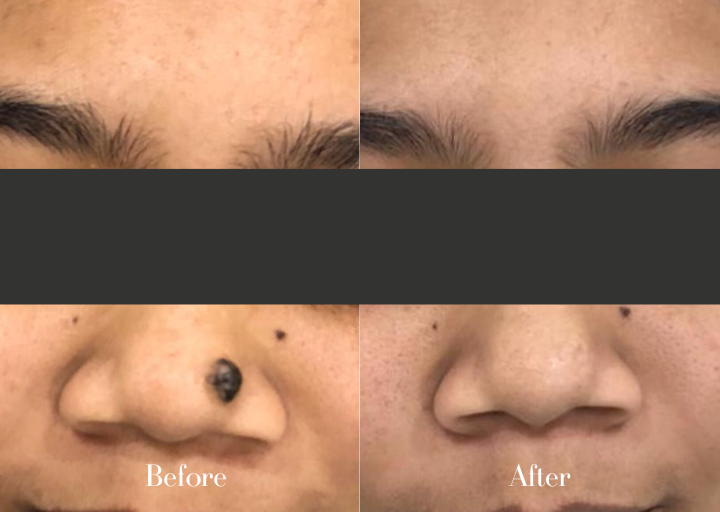
Treatment Process / What to Expect
Consultation & Assessment
Doctor examines the mole or skin tag to determine whether removal is appropriate and which technique is suitable.
Your concern, medical history and the lesion's appearance will be assessed before treatment.
Treatment Planning
Doctor decides between plasma pen or electrocautery depending on the type, size, location and characteristics of the lesion.
A personalised approach helps ensure the most appropriate treatment method is used.
Skin Preparation
The treatment area is cleansed and prepared.
The area is kept clean to minimise the risk of infection.
Local Anaesthesia
A local anaesthetic may be used, particularly for procedures where greater comfort is needed.
You may feel a brief pinch or sting from the anaesthetic, followed by numbness.
Removal
Controlled plasma energy or heat generated by an electrical current (electrocautery) is used to precisely remove the targeted tissue.
You may notice warmth, a mild stinging sensation, or a slight smell during treatment.
Immediate Aftercare
The area is cleaned and appropriate wound care is applied.
The treated area may appear red, swollen or slightly raw immediately afterwards.
Healing Phase
A small scab/crust may develop as the skin heals.
Do not pick or peel the scab. Allow it to come off naturally to reduce the risk of scarring or pigmentation.
Aftercare at Home
Keep the area clean and follow the clinic's wound-care instructions. Protect healed skin from sun exposure.
Temporary redness, crusting or pigmentation changes can occur while the skin recovers.
Follow-Up
Review may be recommended depending on the lesion and treatment performed.
Your doctor can assess healing and determine whether any further treatment is needed.
Suitable For
Raised or protruding moles
Skin tags
Benign skin growths
Cosmetic mole removal
Skin tags causing irritation from clothing or jewellery
Patients seeking non-surgical skin lesion removal
Contraindications & Recovery
All skin growths are evaluated by our qualified doctors prior to removal to confirm benign status and select the safest technique.
Frequently Asked Questions
1. Is mole and skin tag removal painful?
Most patients experience minimal discomfort. A local anaesthetic may be used when appropriate. You may feel a brief pinch from the anaesthetic, followed by mild warmth or tingling during treatment.
2. How does the treatment work?
Depending on the lesion, the doctor may use plasma pen or electrocautery to precisely treat the targeted tissue. The most suitable technique depends on the type, size and location of the lesion.
3. How long does the treatment take?
Small lesions can usually be treated relatively quickly. Treatment time depends on the number, size and location of the moles or skin tags.
4. Can all moles be removed with plasma pen or electrocautery?
No. Not every mole is suitable for these techniques. A doctor should assess the mole first and determine the safest and most appropriate removal method.
5. Will there be a scar?
There is a possibility of scarring or temporary pigmentation changes with any skin-removal procedure. Healing varies from person to person and depends on the lesion and treatment depth.
6. Will my skin be red after treatment?
Mild redness, swelling and sensitivity can occur after treatment. A small crust or scab may also develop as the area heals.
7. How long does it take to heal?
Healing time varies depending on the size and depth of the treated area, its location and your individual healing response. Your doctor will advise you on expected recovery.
8. Can I remove the scab if it bothers me?
No. Allow the scab to fall off naturally. Picking or scratching can increase the risk of scarring, infection and pigmentation changes.
9. Can I wear makeup after treatment?
Avoid applying makeup directly over an open or freshly treated area. Resume your normal routine once the skin has sufficiently healed, according to your clinic's advice.
10. Can I exercise after the treatment?
Your clinic may recommend avoiding strenuous exercise, excessive sweating and activities that could irritate the treated area during the early healing period.
11. Can I go out in the sun after treatment?
Minimise sun exposure while the area is healing. Once appropriate, use good sun protection to help reduce the risk of post-inflammatory pigmentation.
12. Can skin tags grow back?
The treated skin tag itself is removed, but new skin tags can develop elsewhere.
13. Can I remove multiple moles or skin tags in one session?
This may be possible depending on the number, size, location and type of lesions. Your doctor will determine what is appropriate during consultation.
14. What if my mole changes after treatment?
Any unusual change, persistent bleeding, significant inflammation or delayed healing should be reviewed by your doctor. Suspicious moles should be medically assessed rather than treated purely for cosmetic reasons.
15. Who is suitable for the treatment?
Suitability depends on the type of lesion, your skin condition, medical history, medications and healing risk. A consultation is recommended before treatment.
Begin Your Growth Removal
Remove unwanted moles and skin tags safely with our minimally invasive Mole & Skin Tag Removal treatments. Book your doctor consultation with Pure Touch Clinic today.
Got a mole or skin tag that's been bothering you? Don't guess whether it can be removed—get it assessed by a qualified doctor first.
BOOK YOUR CONSULTATION →Visit Our KL & PJ Branches
Bangsar South
UG-5, Upper Ground Floor, The Vertical Podium
Avenue 3, Bangsar South, No.7, Jalan Kerinchi
59200, Kuala Lumpur
Monday – Friday: 9:00 am – 5:30 pm
Saturday: 9:00 am – 1:00 pm
Sunday: Closed
Neo Damansara
F-LG-09, Neo Damansara
Jalan PJU 8/1, Damansara Perdana
47820 Petaling Jaya, Selangor
Monday – Friday: 9:00 am – 5:30 pm
Saturday: 9:00 am – 1:00 pm
Sunday: Closed